

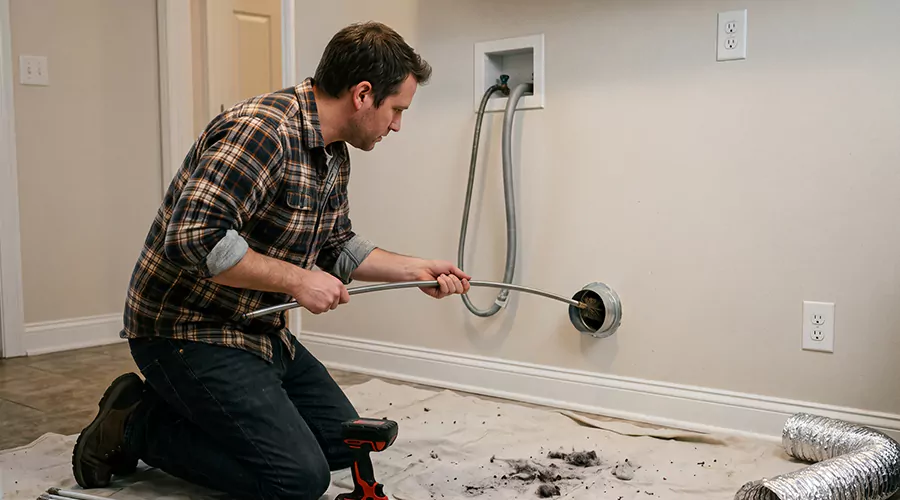
Dryer vent cleaning costs approximately $145 on average in the United States in 2026, with most standard residential services costing between $80 and $185. Roof dryer vent cleaning typically costs $150 to $250 because reaching the termination requires additional equipment and safety precautions. The final price depends on the vent's location, length, number of bends and amount of accumulated lint.
A dryer vent carries hot, moisture-laden air and loose fabric fibers from the appliance to an outdoor exhaust opening. Over time, some lint escapes the dryer's filter and collects inside the vent pipe. This buildup can restrict airflow, causing clothes to take longer to dry and increasing the risk of overheating.
Professional cleaning removes accumulated lint from the exhaust path and helps identify damaged connections or blocked outdoor terminations. However, not every installation requires the same amount of work. A short vent through an exterior wall is generally easier to clean than a concealed duct that travels through several floors before reaching the roof.
Understanding typical prices makes it easier to compare service estimates and identify charges that may involve additional repairs rather than cleaning alone.
What Is the Average Dryer Vent Cleaning Cost in 2026?
The average professional dryer vent cleaning cost is approximately $145 in 2026. Published U.S. cost data commonly places standard residential cleaning between $80 and $185, although some pricing surveys report a narrower normal range of approximately $104 to $188. These figures are useful planning estimates rather than guaranteed prices in every market.
The amount of work is often more important than the size of the home. A small house with a long roof exhaust may require more labor than a larger home with a short wall vent. The technician also needs to consider whether the duct is accessible and whether lint has accumulated around several bends.
| Dryer Vent Cleaning Service | Estimated 2026 U.S. Cost |
|---|---|
| Standard residential dryer vent cleaning | 80–185 |
| Average professional cleaning | Approximately $145 |
| Basement or first-floor vent | 80–150 |
| Second-floor vent | 110–185 |
| Roof dryer vent cleaning | 150–250 |
| Standalone dryer vent inspection | 30–60 |
| DIY dryer vent cleaning kit | 15–50 |
These categories overlap and should not be added together automatically. A standard cleaning service may already include the exterior opening and the transition duct behind the appliance. Likewise, a company may waive the inspection fee when the cleaning is completed during the same visit.
Some projects exceed the typical range because of heavy blockages or difficult access. Before approving a price, ask which parts of the exhaust system will be cleaned and whether any additional charges apply.
What Factors Affect Dryer Vent Cleaning Prices?
The main factors affecting the price are accessibility and how much work is required to clear the exhaust system. Longer ducts and complicated routing can require additional cleaning time. A blockage caused by nesting material or damaged vent components may also create a separate repair expense.
Location of the Exterior Vent
Dryer vents can terminate through an exterior wall or roof, depending on the home's layout. A wall outlet at ground level is generally easier to access than a roof opening. Because roof work involves additional safety precautions, the cleaning price is usually higher.
Second-floor wall vents can also cost more than ground-floor outlets. A technician may need specialized access equipment to inspect the outside termination. However, the exact price depends on whether the entire exhaust path can be cleaned safely from accessible locations.
Length of the Dryer Exhaust Duct
The length of the exhaust duct affects how far lint must be removed. A short, straight passage may be cleaned relatively quickly, while a long route through a ceiling or attic can require specialized extension equipment. More time may be needed to verify that the full length is clear.
The total duct length should be evaluated alongside the dryer's installation requirements. A very long exhaust can create airflow resistance even when it is clean. If the vent exceeds the approved configuration, cleaning alone may not correct the underlying performance problem.
Number of Elbows and Bends
Every elbow changes the direction of exhaust airflow and creates resistance. Lint can collect around bends where the airflow pattern changes. Cleaning equipment must reach these locations without damaging the metal passage or becoming stuck.
A vent containing several sharp turns may take longer to clean than a straight duct of the same length. The technician may need to work from more than one access point to remove accumulated material. The complexity of the route can therefore affect the quote even when no severe blockage is present.
Amount of Lint Buildup
A dryer vent that has been cleaned regularly may contain relatively manageable deposits. A neglected system can have thick lint accumulation along the exhaust pipe or around the outdoor termination. Heavy buildup takes more time to remove and may require additional inspection to confirm that the passage is clear.
The amount of lint also depends on how often the dryer is used. Large households that run several loads daily may need more frequent cleaning. However, a clogged vent does not automatically mean the duct is damaged or must be replaced.
Pest Nests and Outdoor Obstructions
Birds or other animals can sometimes enter a damaged exterior vent termination. Nesting materials can create a substantial blockage that ordinary lint brushing may not remove. If animals are present, removal may require wildlife or pest-control services.
The exterior damper may also need repair or replacement. An appropriate dryer termination should prevent unwanted entry without creating a lint-trapping screen across the outlet. Any additional pest-related work should be described separately in the estimate.
Local Labor Rates
Professional cleaning prices vary between cities and service markets. Contractors in higher-cost metropolitan areas may charge more for labor and travel. A minimum service-call charge can also affect the price of a short, otherwise simple vent.
Comparing local estimates provides a more accurate budget than relying entirely on a national average. The estimates should cover the same cleaning scope so the prices can be evaluated fairly.
How Much Does Dryer Vent Cleaning Cost by Vent Location?
Vent location influences both access and the amount of equipment needed. Most ground-level wall outlets are easier to inspect than vents terminating above the second floor or on a steep roof. Even when the ducts are the same length, access conditions can create different cleaning costs.
First-Floor and Basement Dryer Vents
Cleaning a basement or first-floor dryer vent commonly costs $80 to $150. These installations often discharge through an exterior wall at a relatively accessible height. A short duct with few bends may be cleaned from the appliance connection and outside termination.
However, a basement dryer can still have a complicated vent path. Some exhausts travel through ceiling joists before reaching the outdoors. The actual configuration determines whether the project remains a simple cleaning.
Second-Floor Dryer Vents
Second-floor dryer vent cleaning commonly costs $110 to $185. The higher location may require additional equipment to reach the exterior termination. A technician also needs to determine whether the duct passes through concealed wall or ceiling spaces.
Access is not the only concern. Second-floor laundry rooms sometimes have longer ducts because the dryer is located away from an exterior wall. The number of bends and amount of lint can affect the final cost.
Roof Dryer Vents
Roof dryer vent cleaning typically costs $150 to $250. These installations are more difficult to access because the exterior hood may be located on a pitched roof. Cleaning may also involve a long vertical passage that is difficult to inspect from the laundry room.
The service should include consideration of both the duct and roof termination. Lint may accumulate near the upper outlet or interfere with the backdraft damper. Because of fall hazards and the risk of damaging roofing materials, roof-access work is best handled by a qualified professional.
How Much Does Dryer Vent Cleaning Cost for Different Blockages?
The type of obstruction can affect whether a standard cleaning fee is sufficient. Ordinary lint is the most common material found in residential dryer exhaust ducts. More complicated restrictions may involve collapsed hoses or nesting debris that requires removal before the exhaust can function normally.
| Condition | Likely Work | Cost Consideration |
|---|---|---|
| Normal lint accumulation | Brush and vacuum exhaust passage | Usually standard cleaning price |
| Heavy lint blockage | Additional cleaning and verification | May exceed basic service charge |
| Bird nest or pest debris | Remove obstruction and assess hood | Additional work may be charged |
| Crushed transition duct | Replace damaged connector | Separate material and labor cost |
| Damaged exterior termination | Repair or replace hood | Additional repair charge |
| Excessively long or poorly routed duct | Evaluate rerouting | Separate installation project |
A damaged transition hose may need replacement rather than repeated cleaning. The hose can restrict airflow when it has been permanently crushed behind the dryer. Similarly, a faulty outdoor flap can cause recurring obstruction even after lint has been removed.
The cleaning estimate should distinguish between removing deposits and correcting physical damage. These are different services, and one may not be included in the other.
What Additional Charges Can Appear on a Dryer Vent Cleaning Bill?
Additional charges may arise when the technician discovers problems beyond ordinary lint accumulation. An inspection may reveal a damaged transition duct or exterior hood that needs replacement. Pest activity or unusual access conditions can also increase the work required.
Published 2026 U.S. pricing provides the following general benchmarks for related services.
| Additional Service | Approximate Cost |
|---|---|
| Dryer vent inspection | 30–60 |
| Cleaning that includes bird nest removal | 120–250 for some projects |
| Exterior pest guard installation | 30–100 |
| Dryer vent replacement | 100–300 for many projects |
| Dryer vent rerouting or new installation | 200–800 |
| Basic DIY cleaning kit | 15–50 |
These are overlapping service categories, not amounts that should automatically be combined. A contractor may provide a single quote that includes ordinary cleaning and removal of a minor obstruction. Extensive pest remediation or installation changes can be more expensive.
An exterior pest guard must be designed specifically for dryer exhaust. Ordinary mesh screening is not appropriate because lint can collect across the openings. Any modification should maintain a free exhaust path and comply with the applicable dryer installation requirements.
How Much Does Dryer Vent Cleaning Cost per Foot?
Most standard residential dryer vent cleaning is priced as a complete service rather than by the foot. Contractors commonly consider duct length when estimating labor, but a flat rate may already cover a typical exhaust run. Charging by the linear foot is more common for unusually long or specialized installations.
A per-foot estimate can be misleading when the duct contains several bends or difficult access points. A short passage with a major obstruction may require more work than a longer straight section. The number of elbows and condition of the duct should therefore be considered alongside length.
If a contractor uses per-foot pricing, request a clear explanation of the measurement and whether the base service charge is separate. Ask whether the price includes cleaning the transition duct and exterior termination. This makes it easier to compare the total with a flat-rate quote.
Is DIY Dryer Vent Cleaning Cheaper Than Professional Cleaning?
DIY dryer vent cleaning kits commonly cost $15 to $50, making them less expensive than a professional service. A suitable kit may include flexible rods and a brush designed for dryer exhaust ducts. However, the savings depend on whether the full passage can be cleaned safely without damaging the vent.
A short, straight exhaust with accessible connections may be manageable for a homeowner. A long vertical duct or roof termination is more complicated because the cleaning tool may not reach every section. Improper brush use can also damage joints or leave a detached tool inside the exhaust.
| Factor | DIY Cleaning | Professional Cleaning |
|---|---|---|
| Typical cost | 15–50 for basic kit | 80–185 for standard service |
| Equipment | Household brush and vacuum | Specialized cleaning tools |
| Short accessible duct | Often manageable | Suitable |
| Long concealed duct | Can be difficult | Usually preferable |
| Roof termination | Unsafe for ordinary roof access | Qualified access recommended |
| Major blockage | Risk of incomplete removal | Specialized assessment available |
Gas dryers require additional care because moving the appliance can strain the fuel connection. Do not disconnect or disturb gas piping merely to perform a household vent cleaning. If safe access is unavailable, professional service is the better option.
Is Dryer Vent Cleaning Worth the Cost?
Dryer vent cleaning is worthwhile when lint buildup has restricted the exhaust or when routine maintenance is due. A clean exhaust allows moisture to leave the appliance more effectively, which can reduce unnecessarily long drying cycles. Regular cleaning also addresses one of the known contributing factors in dryer fires.
The U.S. Fire Administration recommends cleaning dryer vent ductwork annually and removing lint from the filter every time the appliance is used. These tasks serve different purposes because the lint screen does not capture every fiber entering the exhaust.
Cleaning does not guarantee lower utility bills or prevent every dryer malfunction. A defective heating element or another appliance problem may still require repair. However, maintaining a clear exhaust removes an avoidable restriction and supports normal dryer operation.
How Often Should You Pay for Dryer Vent Cleaning?
A full dryer vent cleaning approximately once a year is a useful starting point for most homes. More frequent service may be appropriate when the dryer is used heavily or the exhaust route contains many bends. The best interval depends on actual lint buildup and drying performance.
Several conditions may justify earlier inspection:
- Clothes regularly require more time to dry.
- The dryer is used for multiple loads every day.
- The exhaust duct is unusually long.
- Several sharp bends are present in the vent route.
- Lint accumulates visibly at the outdoor termination.
- The dryer has overheated or shut down unexpectedly.
- The exhaust has previously experienced a major blockage.
A household with a short, straight duct may experience less buildup than one with a complicated roof exhaust. However, the lint filter still needs cleaning after every load. Periodic inspection helps determine whether the annual maintenance interval remains suitable.
What Should Be Included in a Professional Dryer Vent Cleaning?
A complete cleaning should address the exhaust path rather than only the lint filter or visible outlet. The exact procedure depends on whether both ends of the duct can be accessed safely. The contractor should explain any sections that cannot be reached or inspected.
A normal service may include checking accessible connections and removing lint from the transition duct. The permanent exhaust passage is then cleaned using appropriate equipment. The exterior hood or roof termination should also be checked for debris and a functioning damper.
After cleaning, the technician should verify that the exhaust path is connected and unobstructed. If the vent is damaged or the appliance continues showing abnormal symptoms, additional work may be recommended. The estimate should distinguish those repairs from ordinary cleaning.
How Can You Avoid Unnecessary Dryer Vent Cleaning Charges?
Comparing prices is most useful when every estimate covers the same service. A very low advertised rate may apply only to a short wall vent and exclude roof access or heavy blockages. Understanding the full scope helps prevent unexpected charges after the appointment begins.
Ask a few practical questions before approving the work:
- Does the quoted price include the entire exhaust duct?
- Is cleaning the transition duct behind the dryer included?
- Will the outdoor termination be inspected and cleaned?
- Are roof access or upper-floor charges included?
- What happens if a heavy blockage or damaged duct is found?
- Is an airflow check included after cleaning?
- Are replacement parts or pest removal billed separately?
A clearly written estimate is more useful than a price that does not explain what will be cleaned. The service should focus on removing lint and restoring normal exhaust airflow, not automatically adding unrelated treatments. Chemical fogging is not a routine substitute for physically removing lint from a dryer duct.
When Should You Call a Professional?
Professional cleaning is appropriate when the exhaust is difficult to reach or contains a serious blockage. A roof termination or long concealed duct may require specialized tools and safe access. A technician can also identify crushed sections and other defects that ordinary cleaning cannot correct.
If the dryer produces a burning smell or becomes unusually hot, stop using it until the cause has been evaluated. Continuing to operate a dryer with restricted exhaust can create additional safety concerns. Smoke or fire requires emergency action rather than a routine cleaning appointment.
Professional assistance is especially important when accessing the vent would require disturbing a gas connection. The dryer must remain safely connected after any cleaning or repair.
Conclusion
Dryer vent cleaning costs approximately $145 on average in 2026, with standard residential services commonly priced between $80 and $185. Roof vents and difficult blockages cost more because they require additional time and equipment. Routine cleaning can restore exhaust airflow and reduce lint-related fire hazards. Compare estimates based on the full work included, not only the advertised price. Before scheduling service, identify where your dryer exhaust terminates and whether the vent has been cleaned within the past year.